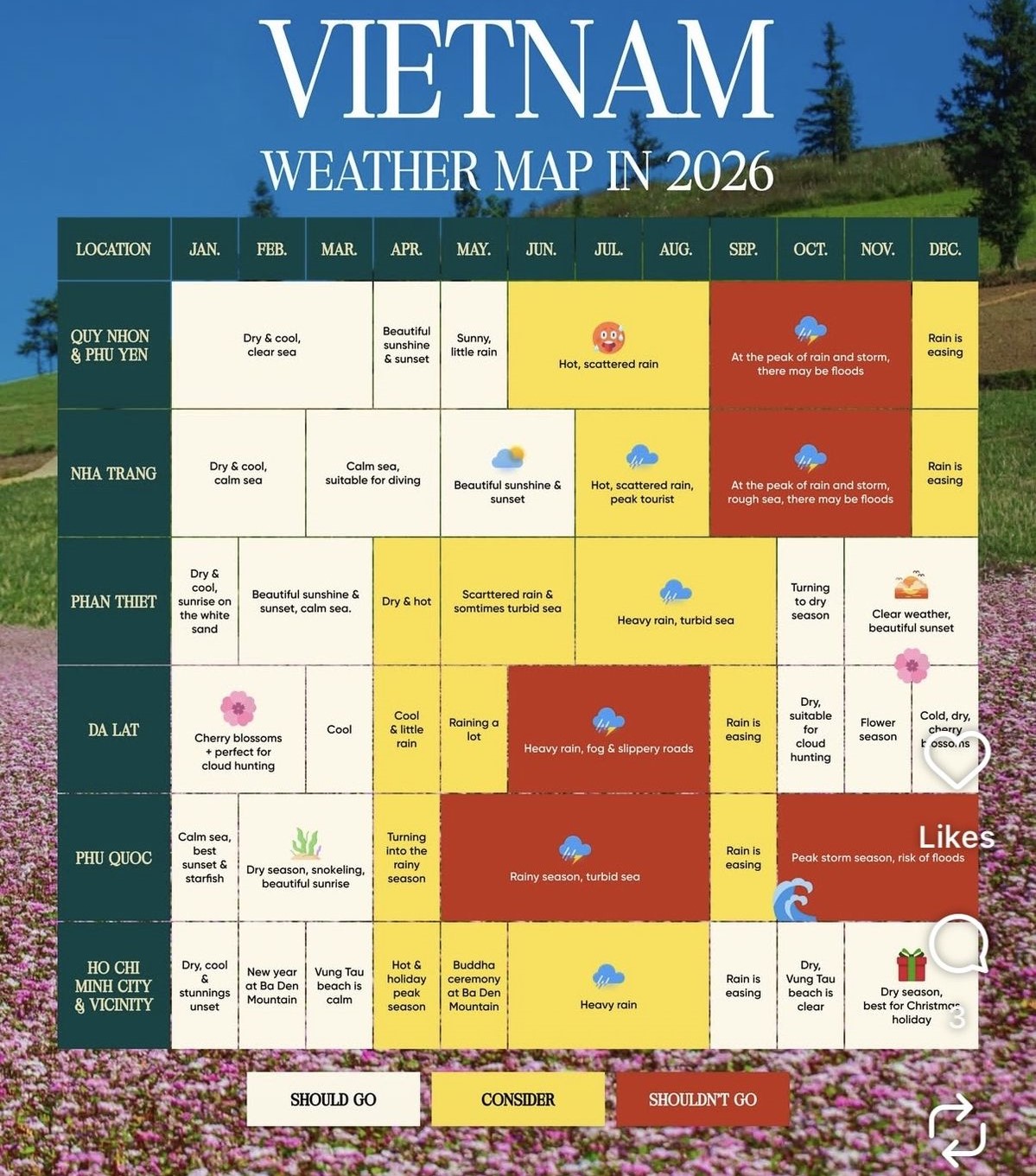
Stop guessing when to visit Vietnam. Discover the insider's guide to timing your perfect escape, from sun-drenched beaches to misty mountains.
The Best Time to Visit Vietnam
Spilling along the eastern shores of mainland Southeast Asia, Vietnam offers magical experiences year-round, but the weather varies widely depending on your destination. The country spans 1,650km, taking in tall mountains in the north and flat, tropical wetlands in the Mekong Delta.
July and August: The Top Months for Beach Lovers
- The hot, sticky high season from July to August is the busiest time of year, coinciding with the summer school holidays and favorable beach weather on the central coast.
- Expect demand for flights to soar and accommodation prices to increase by up to 50% in resort areas like Danang and Nha Trang.
- The rest of the country is warm and humid, with spectacular summer monsoon downpours and occasional coastal typhoons.
- It is a poor time to visit the north; trekking trails can turn to quagmires, and Hanoi and Halong Bay experience sultry temperatures and heavy showers.
- Festivals: In August, Trung Nguyen (Wandering Souls Day or Vu Lan) features huge spreads of food left out for spirits, with big celebrations at pagodas in Ninh Binh, Ho Chi Minh City (HCMC), and Hanoi.
December to March: The Season to Visit Hanoi and Ho Chi Minh City
- Winter in Vietnam is generally drier and cooler, though higher elevations in the north can get downright chilly. From December to February, the highlands around Sapa can even see a dusting of snow, while the Mekong Delta basks above 27°C (81°F).
- This is the perfect time to explore Hanoi and Ho Chi Minh City on foot, thanks to manageable temperatures and low humidity.
- It is also an excellent time to head out to the Mekong Delta and the island of Phu Quoc, offering warm temperatures and clear skies. Phu Quoc specifically sees its best beach weather from December to March.
- The drier weather from January to March is a good time for exploring the historic sights of Hue and Hoi An.
- Trekking in the northern highlands is optimal from October to April, though December and January nights can be uncomfortably cool.
- Festivals & Events: The Tet festival (Lunar New Year) in late January or early February causes a spike in transport and hotel prices as the whole country goes on the move. Other notable events include Dalat’s biennial Flower Festival in December, Buon Ma Thuot’s annual coffee festival in March, and Christmas celebrations in places with large Catholic communities like Hanoi, HCMC, and Hue.
April to June & September to November: Avoid the Crowds
- These low-season months mark the transition between the cooler, drier winter and the hot, humid summer.
- Tourism slows down, making it a great time to avoid crowds and save money, with unsettled but rarely extreme weather.
- October to November is a particularly favorable time to visit Halong Bay and Bai Tu Long Bay, offering mild temperatures and more dry days than wet days. For cruising Halong Bay, March to April is also a great window to avoid summer storms.
- September to November is fantastic for trekking or riding a motorcycle around Sapa, as the terraced hillsides turn golden, trails are less muddy, and summer crowds have thinned out.
- Festivals: Key events include the biennial Hue Festival (April, May, or June), Nha Trang Sea Festival (every second June), Phat Dan (May), the explosive Danang Fireworks Festival (June or July), Vietnam’s National Day on September 2nd, the Mid-Autumn Festival or Trung Thu (September or October), and the Khmer Ok Om Bok Festival (October or November).
Visiting Vietnam During Typhoon Season
- The Northwest Pacific typhoon season officially runs from May to November, but Vietnam faces the highest risk of storms from August to September.
- The country averages four to six typhoons annually, bringing a risk of flooding and disruptions to air and sea transport.
- The areas most affected by typhoons are the southern coast and the far north coast, including Halong Bay.
- Inland areas may just experience heavy rain and occasional power cuts, while weather tends to be most severe near the shore.
- Travelers should monitor weather reports and prioritize land-based activities over boat trips, domestic flights, and beach days during this time.